Reasons why we don’t share our thoughts and why we should anyway.


Reasons why we don’t share our thoughts and why we should anyway.
For those who know me at work, I’m probably not someone you’d describe as shy about sharing their thoughts. In fact, some might say I could benefit from holding back my opinions occasionally.
But that’s not how I started my career.
Early on, I was usually the quiet one. I rarely spoke up in meetings. I’d rehearse my update before stand-up and still feel nervous about saying it out loud. I avoided asking questions in case they sounded stupid. Disagreeing with the group? Definitely not.
Over time, with support from mentors and peers, this shifted. As I began to share my thoughts more, I realised something. My reasons for not speaking up were rarely as good as I thought.
Reason 1: What if I’m wrong?
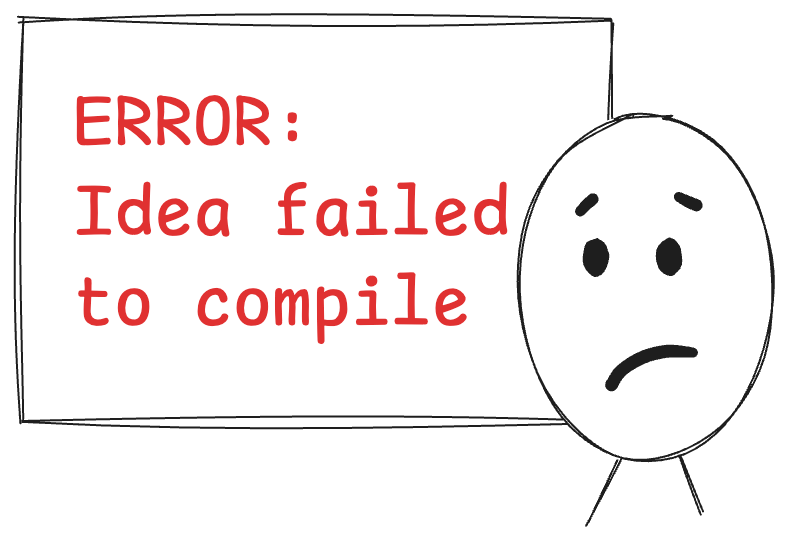
This is perhaps my most common reason.
In a technical field, it’s easy to see when you’re wrong. In code, the compiler fails, tests break, or the CPU suddenly skyrockets. Computers are very good at telling you when something doesn’t work.
People are a little different.
In meetings no one throws a compiler error when you make a mistake. They’ll just say “I don’t think that’s right” or explain an alternative approach. For some reason, that can feel much worse.
In reality, though, the two situations aren’t that different. When code fails, we treat it as part of the process. We learn from it. We fix it. We move on. Nobody expects the first version to be perfect.
Conversations work the same way. Sharing a thought isn’t a declaration that you’re definitely right. It’s just contributing something that helps the group think things through. Sometimes it will be correct. Sometimes it won’t. But if it moves the discussion forward, it's valuable.
In systems there are always trade-offs. There are no perfect solutions, just ones we can live with. The fastest way to reach an acceptable solution is by sharing ideas. Even if they’re not perfect.
Next time you hesitate because you might be wrong, remember: you probably have something worth discussing.
Reason 2: Someone else has probably already thought of this

I vividly remember a time early in my career when I felt the group had missed a small but important detail in a problem we were discussing. It was the kind of nuance that meant the suggested solutions wouldn’t really work.
Looking around the meeting, I was surrounded by people I respected. People with far more experience than me.
- “They must have already considered this,” I thought.
- “If it mattered, someone would have said it.”
- “It’s probably obvious why it doesn’t apply.”
So I stayed quiet.
The more the discussion continued, the more uncomfortable I felt. The detail hadn’t been considered at all. If nobody mentioned it, we could spend months building the wrong solution.
Still, I didn’t say anything.
The meeting was nearly over. After almost an hour of me sitting on mute, someone asked the usual question: “Has anyone got anything else before we close?”
I came off mute and mentioned the detail I thought everyone else had already dismissed.
The reaction told me everything.
No one had thought of it.
There was no time to resolve it there, but we scheduled a follow-up meeting, talked it through properly, and ended up replanning the solution with that constraint in mind. It saved a lot of development time that would have gone into building something that wouldn’t have worked.
After that, I was asked more often for my perspective, even when I was one of the less experienced people in the room.
Not because I was smarter than anyone else, but because even if someone else had already thought of the same point, saying it out loud still has value. It can clarify the discussion, expose assumptions, or remind the team about a constraint. Sometimes it just confirms that everyone really is on the same page.
Next time you think someone else has already thought of it, remember: ideas don’t need to be original to be useful. They just need to be shared.
Reason 3: I don’t have time to think it through properly

We’ve all been there. You’re reading a message on Slack, looking into an alert, or listening to a discussion in a meeting. The cogs are turning, the idea is forming, and you’re just about ready to speak…
…and someone beats you to it.
Maybe they said exactly what you were about to say. Maybe they said something close enough that the conversation moves on. Maybe the moment passes.
So you stay quiet, because your thought wasn’t fully formed yet.
I wouldn’t acknowledge alerts until I had already figured out what was wrong. I wouldn’t speak in meetings until I had considered all edge cases. I wouldn’t reply on Slack until I had proofread my message. But problem-solving is messy. Ideas come out half-formed. People interrupt themselves mid-thought. Someone says something slightly wrong, someone else corrects it, and together you get closer to the right answer.
You don’t have to present a finished solution to contribute. Sometimes it’s enough to say:
- “I’m not sure yet, but something about this feels off,”
- “I need to think about this more, but I think there might be an edge case here.”
You won’t always have time to fully form a thought, but sharing it can help the group refine it faster and more robustly.
Reason 4: It’s a stupid question
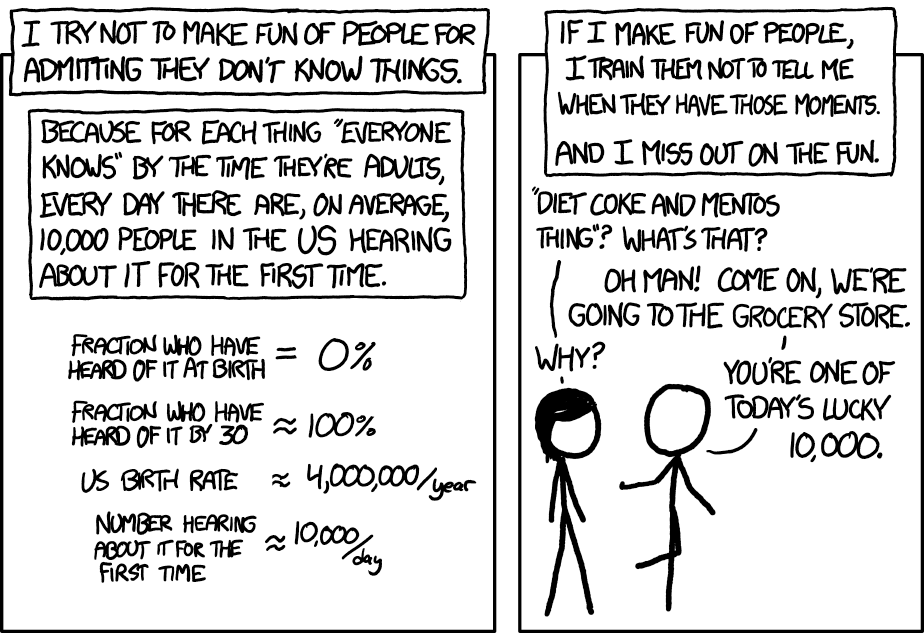 Image credit: "Ten Thousand" by Randall Munroe, XKCD (CC BY-NC 2.5) https://xkcd.com/1053/
This one is similar to Reason 1, so I’ll keep it brief.
One of my mentors used to say:
“The only stupid questions are the ones that don’t get asked.”
If something doesn’t make sense to you, it probably doesn’t make sense to someone else either. They might just be staying quiet for the same reason.
It’s interesting that this feels different when talking to a chatbot. People seem much more comfortable asking questions they think might be silly, maybe because there’s no fear of judgement. You don’t feel like you’re interrupting, and you don’t feel like you’re slowing anyone down. Real conversations don’t feel like that, but perhaps they should.
If you have a question, ask it.
At worst, you learn something. At best, you help everyone else understand the problem better too. And most of the time, the question you thought was stupid turns out to be the one that needed asking.
Conclusion

Most of the reasons we stay quiet exist only in our heads. Nobody told us to stay silent; no one asked us not to contribute. That makes the thoughts harder to spot in the moment, but easier to change once we recognise them.
There are also reasons people stay quiet that don’t come from the individual, but from the way teams and meetings work. Those can be harder to notice and sometimes harder to fix, so I’ll save those for another post.
In the meantime, if you’ve ever had one of these thoughts yourself, maybe next time it’s worth sharing your ideas anyway. I’d certainly love to hear them.